Program overview
Context, approach, and how SOVA delivers results alongside communities.
Shelter and household NFIs are among the first priorities after shock—without them families struggle to sleep safely, store water and food, or maintain basic hygiene.
Detailed scope
Displacement driven by drought, insecurity, or secondary shocks often leaves households without adequate roofing, partitioning, or bedding. Markets may be thin or prices spike precisely when coping capacity is weakest.
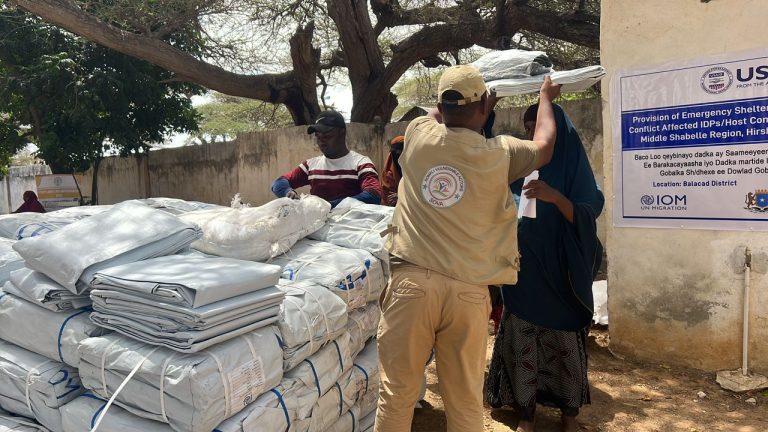
SOVA responds with standardised kits adapted to climate—plastic sheeting, ropes, blankets, sleeping mats, kitchen sets, and jerry cans where assessments show greatest gaps.
Targeting considers household size, disability, female-headed households, and exposure to flooding or overcrowding. Feedback mechanisms help correct exclusion errors quickly.
Where recovery phases begin, SOVA explores incremental improvements—semi-permanent shelter guidance or durable materials pilots—without compromising emergency neutrality principles.
Key interventions
Practical activities SOVA prioritizes within this program—adapted to local assessments and coordinated with relevant clusters and authorities.
- Distribution of shelter plastic, ropes, and fastening materials suited to wind exposure.
- Blankets, mats, and bedding components tailored to household composition.
- Kitchen sets and water containers supporting hygiene and food preparation.
- Crowd management and safe distribution corridors at congested sites.
- Post-distribution monitoring and corrective actions.
- Coordination with shelter cluster frameworks where activated.